This is the time of year to pause and reflect. As I look back on the past year, I think about my art journey and ask myself some important questions: What did I paint? Did I try anything new? Did my work grow? And did I give back to my art community?
Experimenting & Learning
Experimentation continues to be a driving force in my work. While painting on canvas works well and helps me use the many canvases I have on hand, I’ve realized it doesn’t always produce the results I’m looking for.
One big win this year was priming paper with micaceous iron oxide acrylic and terra cotta pastel ground. The warmth and texture are a beautiful complement to the green landscapes I love to create.
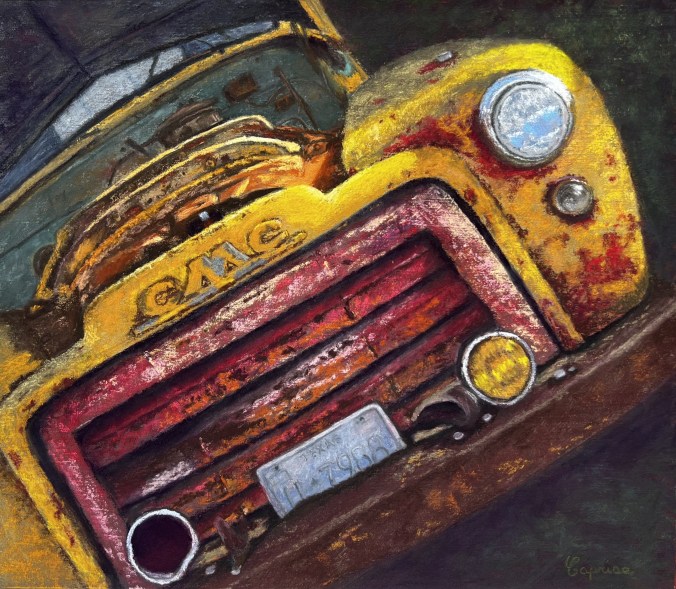
I also discovered that both metallic watercolors and metallic acrylics work well for the underpainting of the truck, adding depth and interest early in the process.
Perhaps one of the most important lessons I’ve learned is knowing when to step back. When I reach the end of a painting, it’s important to give it time to breathe and not rush to call it finished.
Giving Back
Giving back to the art community has been one of the most rewarding parts of my year.
Sharing what I’ve learned with members of the Ozark Pastel Society and the Arkansas Pastel Society
Teaching at LifeQuest of Arkansas
Serving as President of the Arkansas Pastel Society
Each of these experiences brings me great joy. I learn so much from the artists I interact with, and teaching and leadership continually reinforce and strengthen my own skills.
Accomplishments
Winning awards is certainly an acknowledgment that the work I’m producing is strong—in composition, value, color, ability to draw the viewer in, and whatever else a judge may see. I’ve learned to soak in those moments, appreciate it, and then continue painting.
Not every painting can be a winner. Some end up in the trash or painted over entirely—and that’s okay. We are always learning.
My Favorite Paintings This Year
I get the most joy from painting scenes that capture a fleeting moment—ones that stir emotion, spark a memory, and invite the viewer into a quiet conversation with the scene.
Thank you for joining me on this journey. Your support and encouragement are powerful motivators, and I’m grateful to share this path with you.
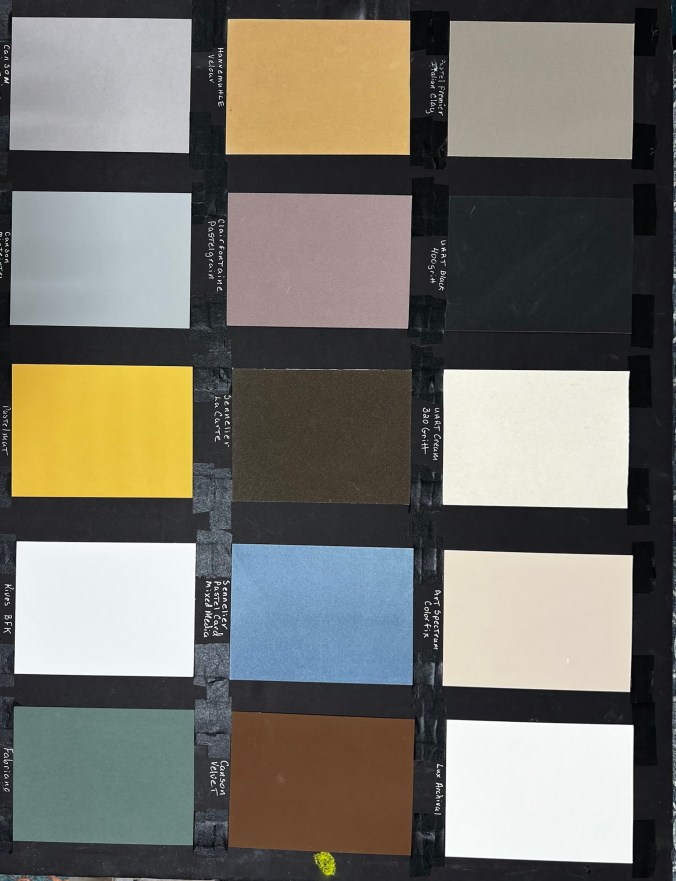
Introduction Soft pastel artists know that paper is just as important as the pastel itself. The right surface can elevate a piece by allowing your unique style and technique to shine through. With the incredible variety of pastel papers available—featuring different textures, colors, and weights—it’s easy to become overwhelmed. That’s why I ordered the Sample Pack from Dakota Pastels: to explore new options and see how each paper worked with my mark-making style and painting approach.
What I’m Looking For This review is entirely based on my personal preferences and how well each paper supports my artistic process. Here’s what I focused on:
My mark-making style (how I apply pastel).
The ability to layer pastels and retain vibrant color.
Paper that handles wet media for underpainting (acrylic or watercolor).
The texture and visual finish that the paper provides.
This isn’t a judgment on the overall quality of each paper—some may work beautifully for other artists.
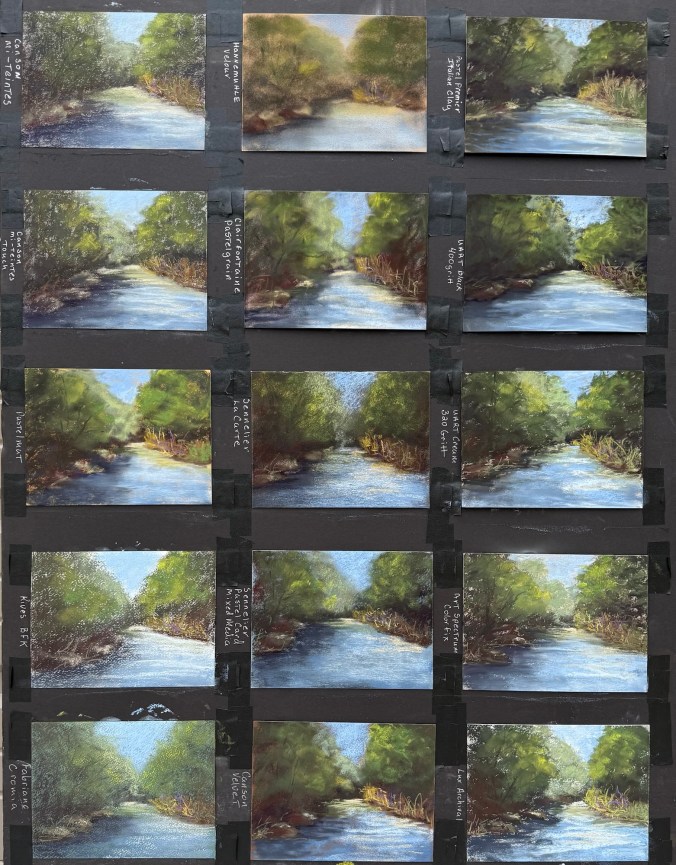
My Testing Approach To ensure consistency in this experiment, I kept several variables the same:
Painted the same scene for each test.
No underpainting: direct painting with minimal blending (which aligns with my typical technique).
Used the same pastel brands: Terry Ludwig, Sennelier, Richeson Handrolled, NuPastel (hard pastel), and a new-to-me soft pastel, J.Luda.
Each test painting was done in 15–20 minutes.
I began with papers I’ve used in the past to “warm up,” then moved on to unfamiliar surfaces.
My Results (Starting from Top Right of the Sample Pack, Moving Down)
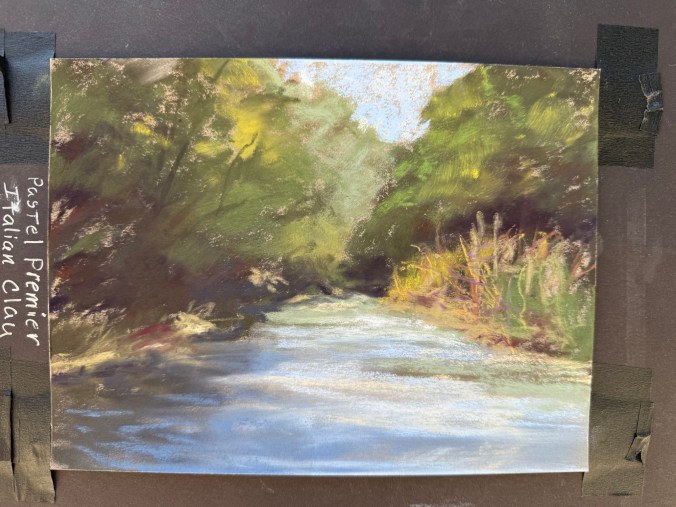
1. Pastel Premier – Italian Clay USA | 100% cotton | Medium tooth aluminum oxide grit | 310gsm | Wet media friendly A reliable favorite. Durable with a great tooth for layering, it handles strong mark-making and almost behaves like a sanded surface. I enjoy this paper for its durability and consistency. Be mindful: the paper color impacts the overall tone. Great for landscapes and rusty vehicles.
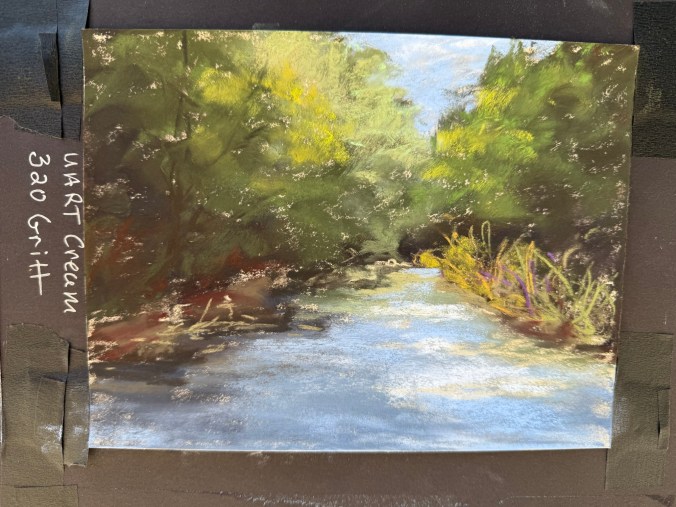
2. UArt – Cream, 320 Grit (Coarse) Germany | Sanded surface | 200 grit course to 800 grit fine | Wet media friendly My go-to paper for years. The coarse grit grabs pigment incredibly well, allowing deep layering and vibrant texture. It is best to use hard pastels like Rembrandt or NuPastel for your base layers, as soft pastels will be used up quickly. The paper can curl, but flattens easily. I’ve used this paper for landscapes and rusty vehicles.
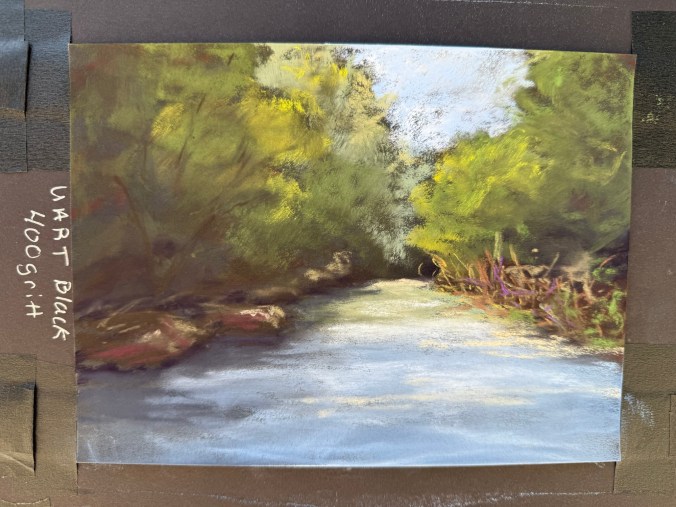
3. UArt – Black, 400 Grit (Medium) Same durable performance as Paper #2 but in black and slightly finer grit. The black surface intensifies color vibrancy and subtly blends tones. A noticeable shift in mood and contrast between this and the cream version. I’ve used this paper for rusty vehicles, and I can see using it for future landscapes.
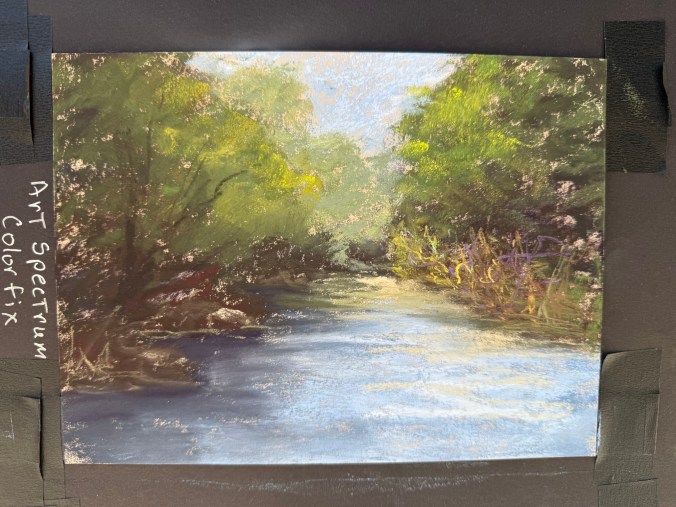
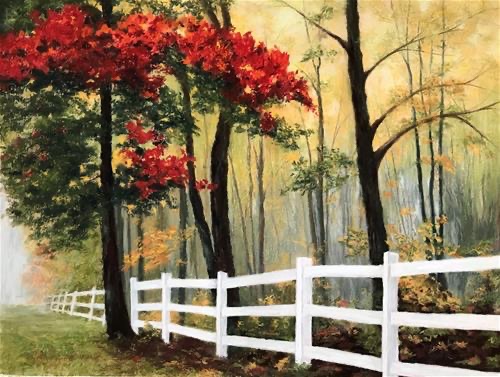
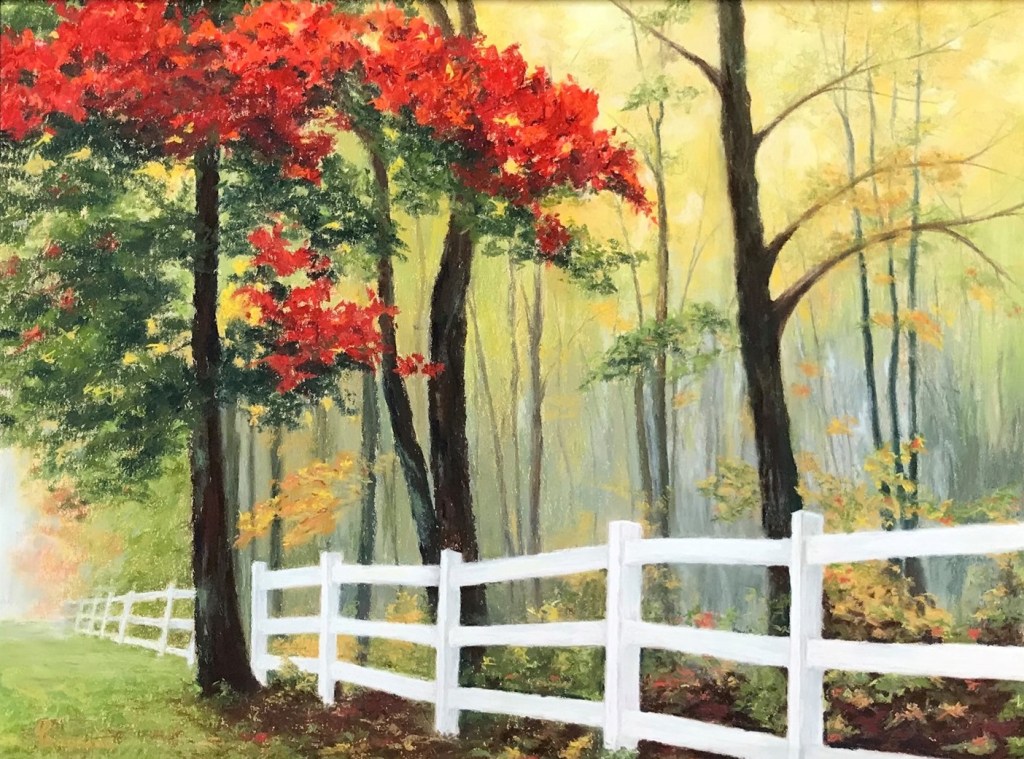
4. Art Spectrum Colourfix – Cream Australia | Acrylic-primer on watercolor paper | Medium tooth | 300gsm | Wet media friendly It’s been years since I used this paper, and it pleasantly surprised me. Good texture, not too hard on pastels, and lots of layering potential. Available in many colors—great for creative paper integration in your design. Some of my favorite landscapes were created on this paper like Komorebi (see painting with red leafed trees below), allowing the yellow paper to show through. I have not used this paper on rusty vehicles as I don’t believe it is gritty enough.
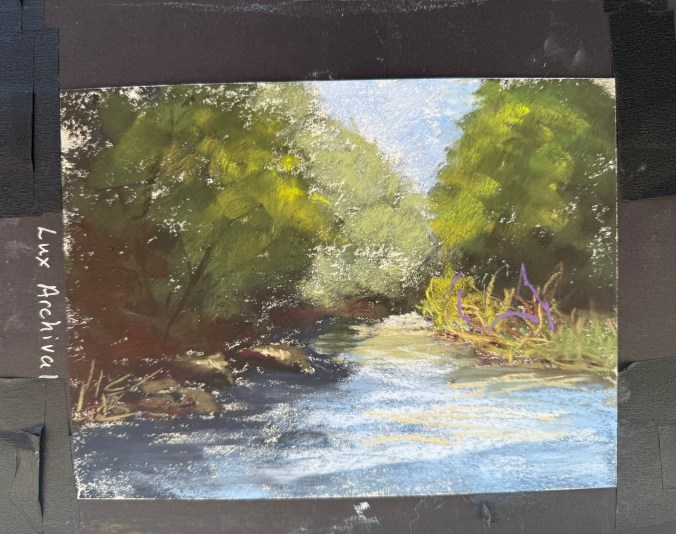
5. LuxArchival France | 100% cotton | Medium/coarse tooth | 300gsm | Wet media friendly Gritty to the touch but goes on smoother than expected. This is a strong contender for future landscape and rusty vehicle work. It held pastel well and delivered clean layering. I actually have larger sheets of this paper, just haven’t gotten around to using it.
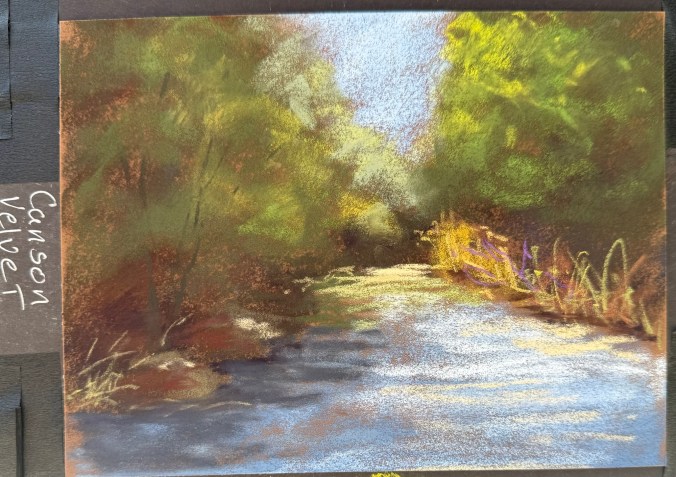
6. Canson Velvet France | toned paper with a velvety finish | 430gsm | Wet media friendly Though it doesn’t feel “velvety” to the touch, pastels glide smoothly over it. Rich color retention, softer final look. The pastel fills the tooth consistently, and it covers the paper well. NuPastels glide over the paper, so I needed to adjust my pressure to make the marks. Blending required a bit more pressure. The velvet left more texture than I expected. Possibly a great choice for animal portraits.
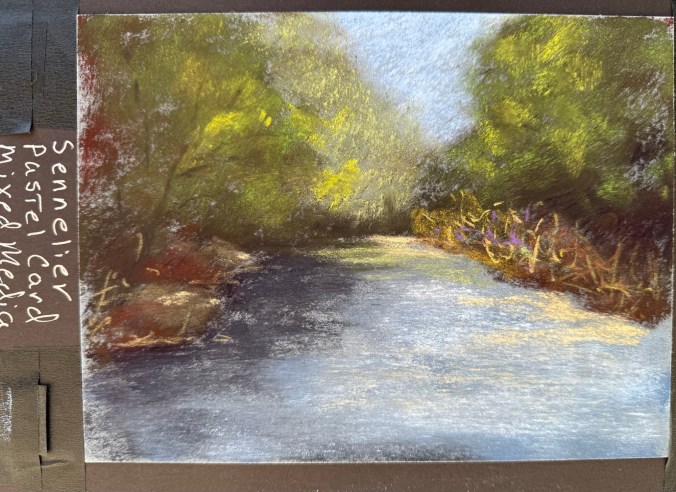
7. Sennelier La Carte Pastel Card – Mixed Media France | coated in a fine layer of cork powder for a light grain | 410gsm | Water and solvent resistant Rough surface with unique texture—not like sanded paper. The paper didn’t chew through the pastels, but I didn’t fill the tooth (on purpose for consistency). I may wash the paper and try mixed media.
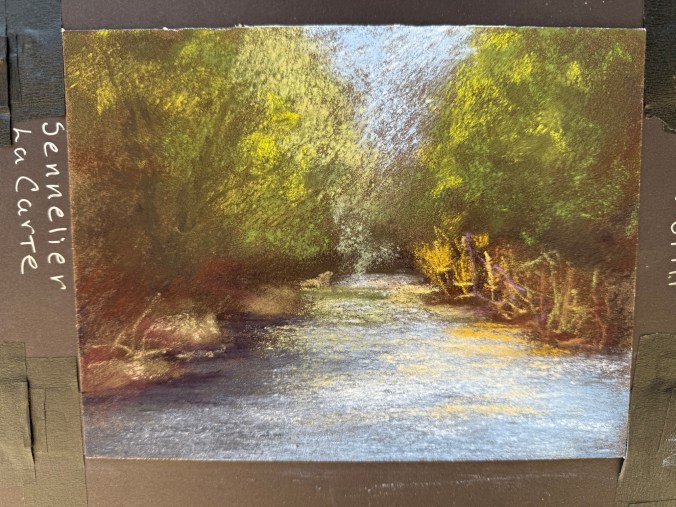
8. Sennelier La Carte Pastel Card France | coated in a fine layer of cork powder and vegetable flakes |medium surface | 360gsm | For dry media only This didn’t work well for my style for landscapes—left a grainy look due to how I apply pastel. It might work for rusty vehicles.
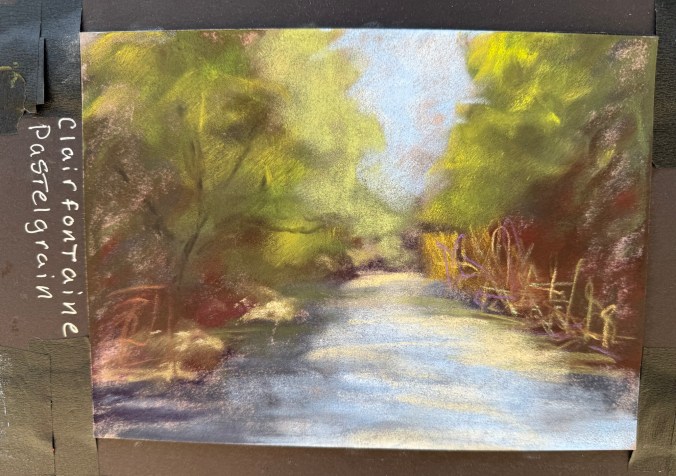
9. Clairefontaine – Pastel Grain France | 360gsm | Wet media friendly Lightly textured and soft-looking, especially when blended. Nice velvety finish when blended. It may be great for delicate subjects like pet portraits.
10. Hahnemühle Velour Germany | Synthetic fibers | 260gsm Truly feels like velveteen rabbit fur! Very soft surface that holds lots of pastel. Produces a romantic, dreamy look—ideal for soft subjects like animal portraits.
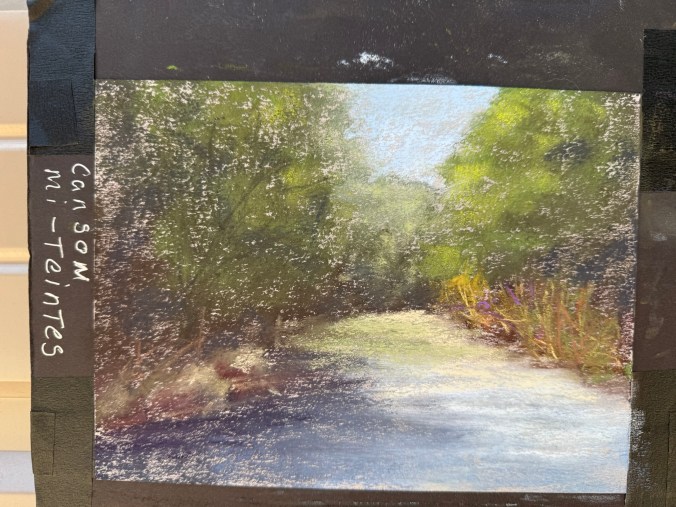
11. Canson Mi-Teintes France | 160gsm | Honeycomb texture one side, fine grain other | I don’t believe this paper can get wet Not ideal for layering—pastels get muddy fast. Needed to blend more than I usually do as the pastel didn’t cover well. This paper didn’t suit my technique well.
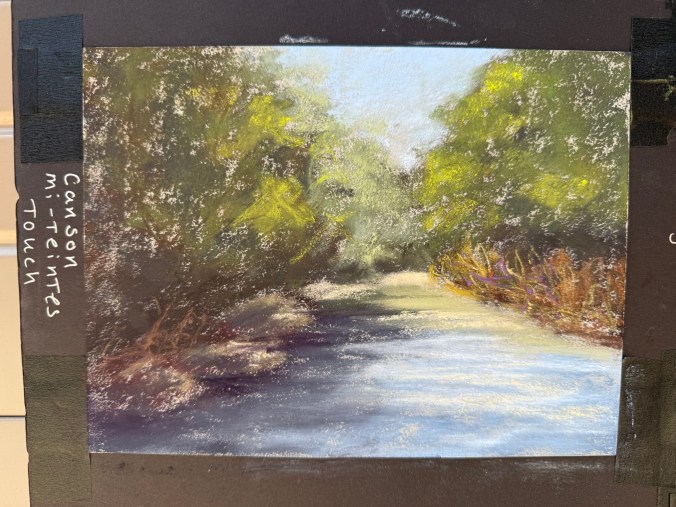
12. Canson Mi-Teintes Touch France | Micro-abrasive coating | Wet media friendly Very different from the original Mi-Teintes. I found layering difficult—colors muddied instead of building cleanly. This paper didn’t suit my technique well.
13. Pastelmat France | Unique synthetic surface | 360gsm | Wet media friendly Varied response depending on pastel brand—some went on velvety, others gritty. Required quite a bit of blending. It holds the pastel well, but may need some technique adjustments.
14. Rives BFK France | 100% cotton | Printmaking paper While absorbent and soft, it didn’t support my pastel technique well. Even Terry Ludwig’s darkest shades looked faint. When I did some research, this is a printmaking paper, and it doesn’t work well with my style. Maybe a blended underpainting would solve the issue of the texture showing through.
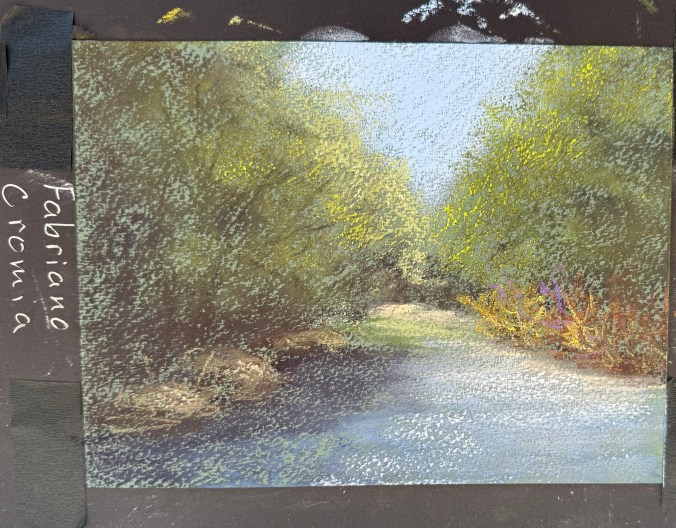
15. Fabriano Cromia Italy | 50% cotton and 50% alpha-cellulose | 220gsm | Light wet media Very similar to Rives in feel and performance. It would likely benefit from underpainting to combat paper texture showing through.
Final Thoughts Exploring this wide range of pastel papers was enlightening. Some surfaces reaffirmed my continued use of Pastel Premier, UArt, and Art Spectrum; others surprised me, and a few didn’t suit my process, but may work well for artists with different styles or subject matter. I’m excited to revisit a few LuxArchival, Sennelier LaCarte Pastel Card Mixed Media, and Sennelier LaCarte Pastel Card with a more tailored approach and see what evolves.
If you’re thinking of trying a new paper, I highly recommend getting a sample pack and putting each one to the test. You never know what might become your next favorite surface!
As an artist, one of the most rewarding aspects of my practice is the opportunity to participate in juried shows—both online and in-person. Every year, I submit my work to a variety of competitions and exhibitions, where my art is evaluated alongside that of many talented peers. For me, simply being accepted into these shows is an honor in itself.
In some cases, these competitions feature over 100 artists and hundreds of pieces of artwork, all vying for attention. With so much talent on display, the process of being selected feels like an affirmation that my art is heading in the right direction. It reassures me that I am continuing to grow, both in my skills and in my ability to connect with viewers—whether that’s the show jurors or the audience who sees my work for the first time.
But, of course, not every submission results in an acceptance. And that’s okay. At the heart of my creative process is passion, and no rejection can ever take that away. For me, art is about self-expression, discovery, and the joy of creation. Whether or not my pieces are selected, the act of making art is always a rewarding experience in itself.
April 18A Pinch Me Moment: Juried into IAPS 2025 Spring Web Show – 46th Open Division
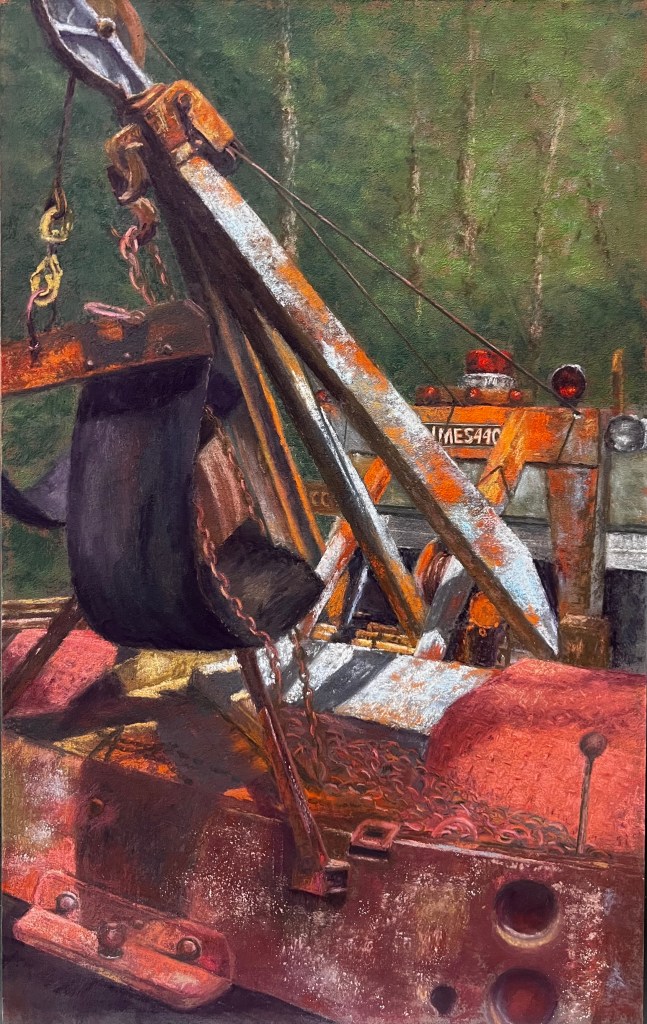
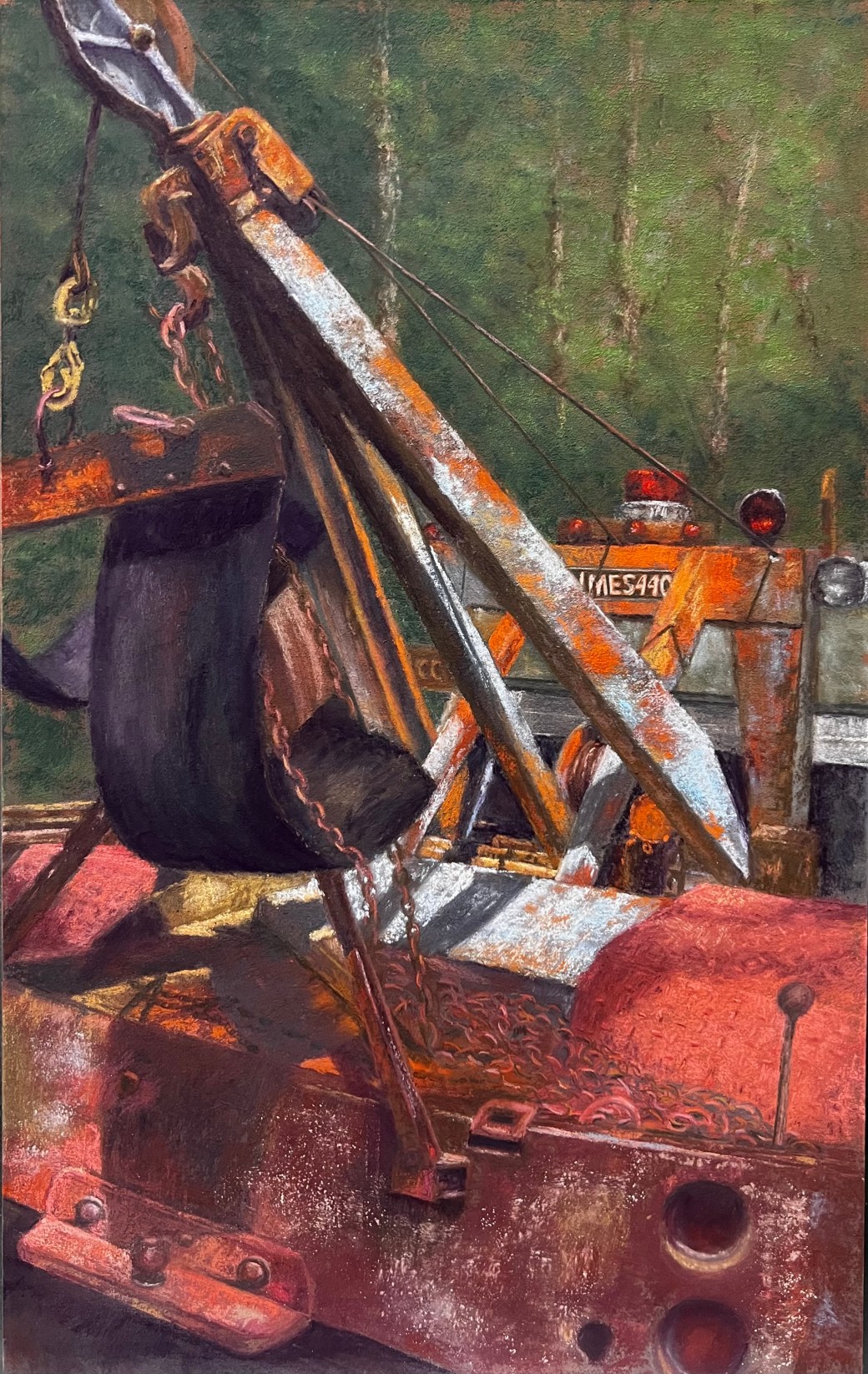
I am thrilled to announce that my painting, Holmes 440 Wrecker, has been accepted into an International Association of Pastel Societies (IAPS) juried exhibition! For those unfamiliar, IAPS unites pastel societies worldwide to support and promote the fine art of pastels. Being selected for such a prestigious international show is both an honor and a significant milestone in my artistic journey.
While I did not receive an award in this particular exhibition, the acceptance itself is a testament to the quality and appeal of my work. Each acceptance into an IAPS juried exhibition earns one point toward the IAPS Master Circle designation. To achieve this honor, artists must accumulate five points, which can be earned through acceptances and awards in IAPS juried exhibitions.
Achieving Master Circle status is a significant accomplishment, and I am excited to be on the path toward this goal. While it may take time to accumulate the necessary points, each step forward is a rewarding experience that fuels my passion for pastel painting.
Thank you to IAPS for this incredible opportunity, and to all who have supported me along the way.
A Special Achievement: Honorable Mention in the Dakota Pastels First Quarter Competition
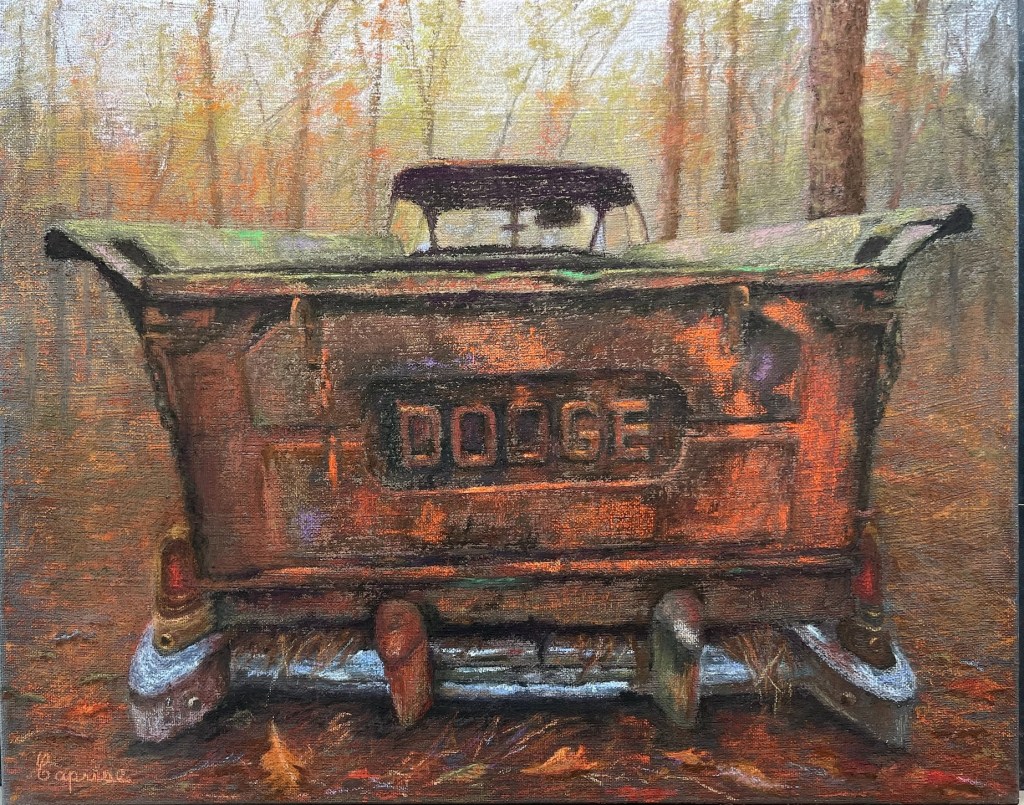
This year has been particularly exciting, as I received an Honorable Mention for my painting Holmes 440 Wrecker in the Dakota Pastels First Quarter Competition. It was a humbling experience to have my work recognized among so many other talented artists.
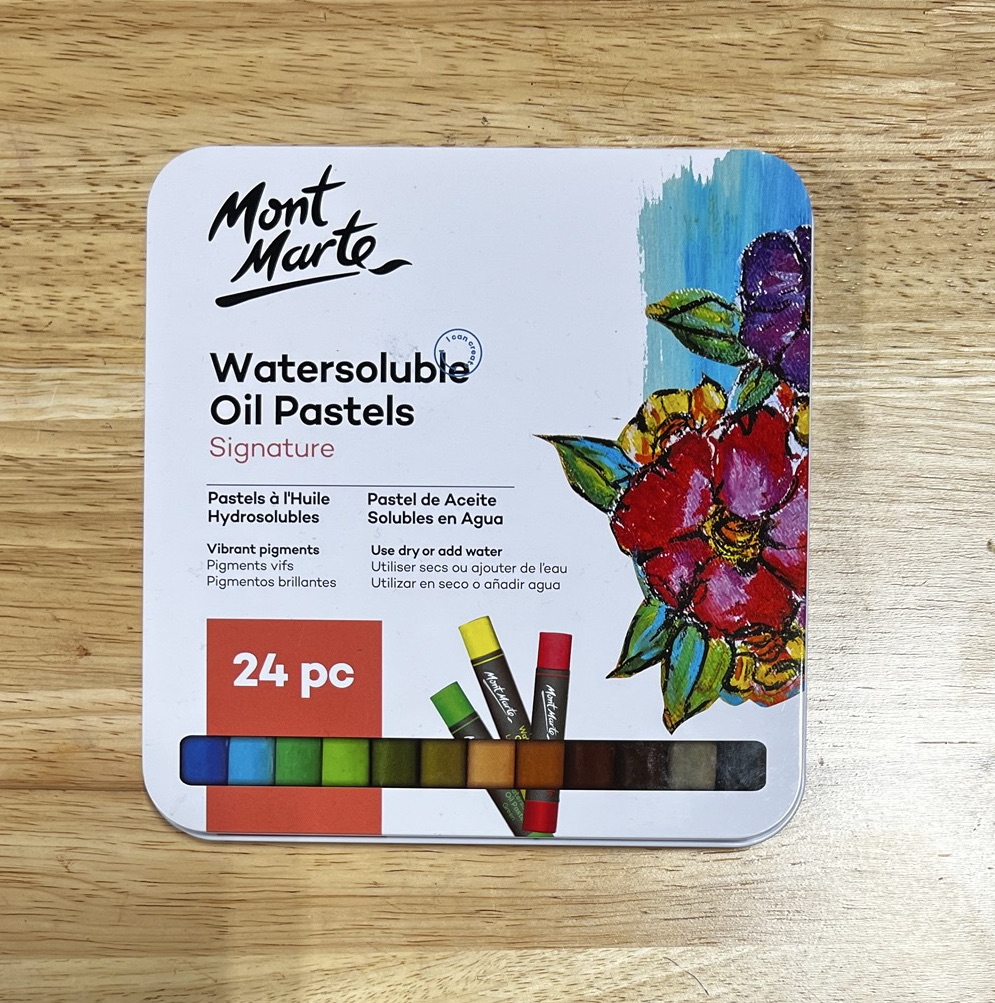
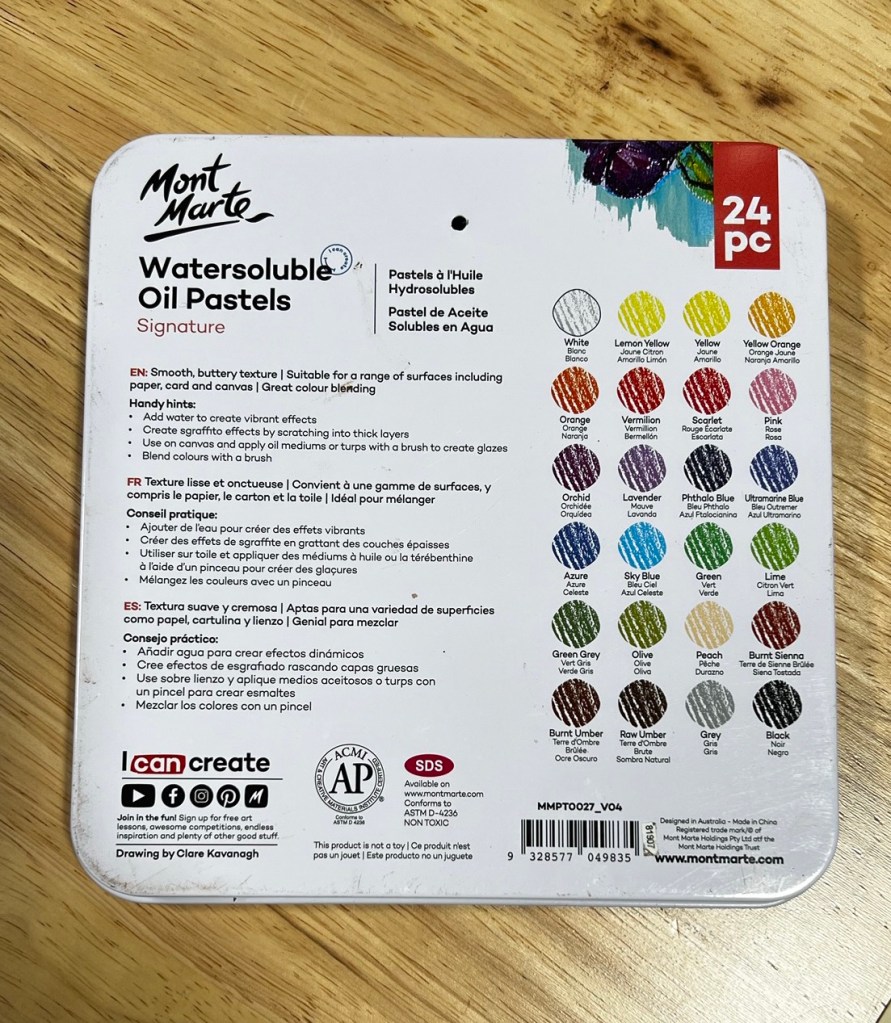
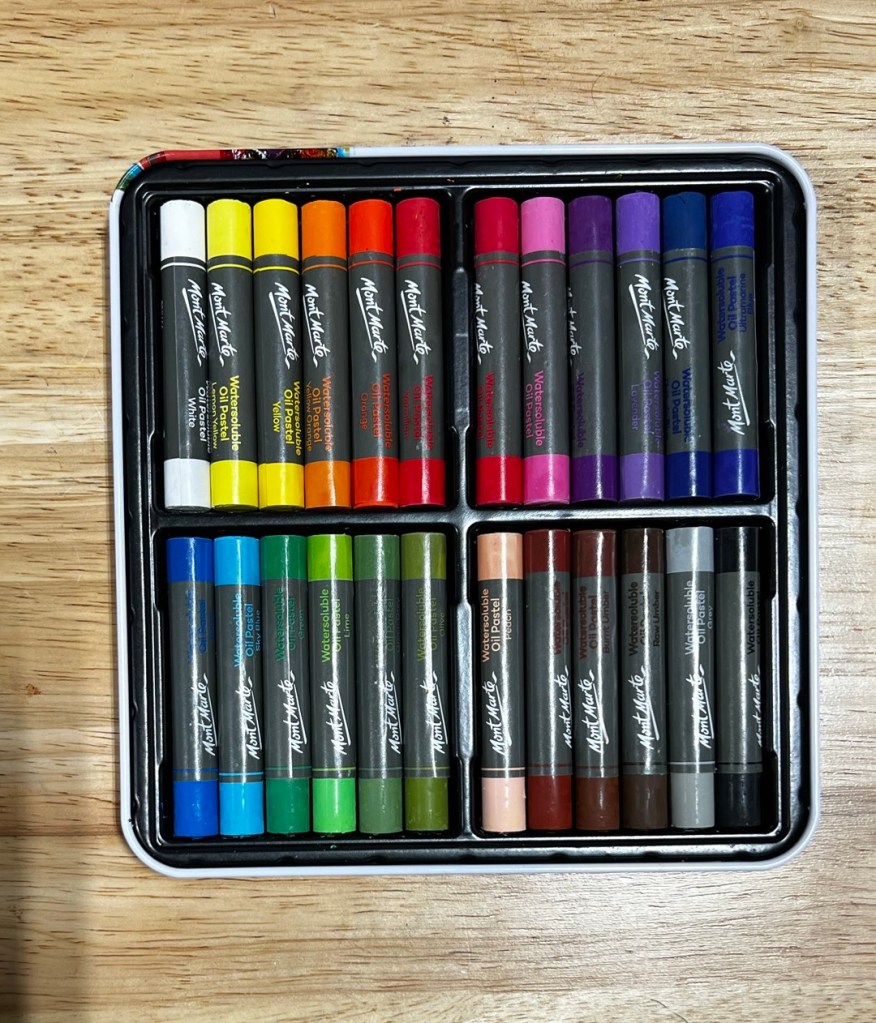
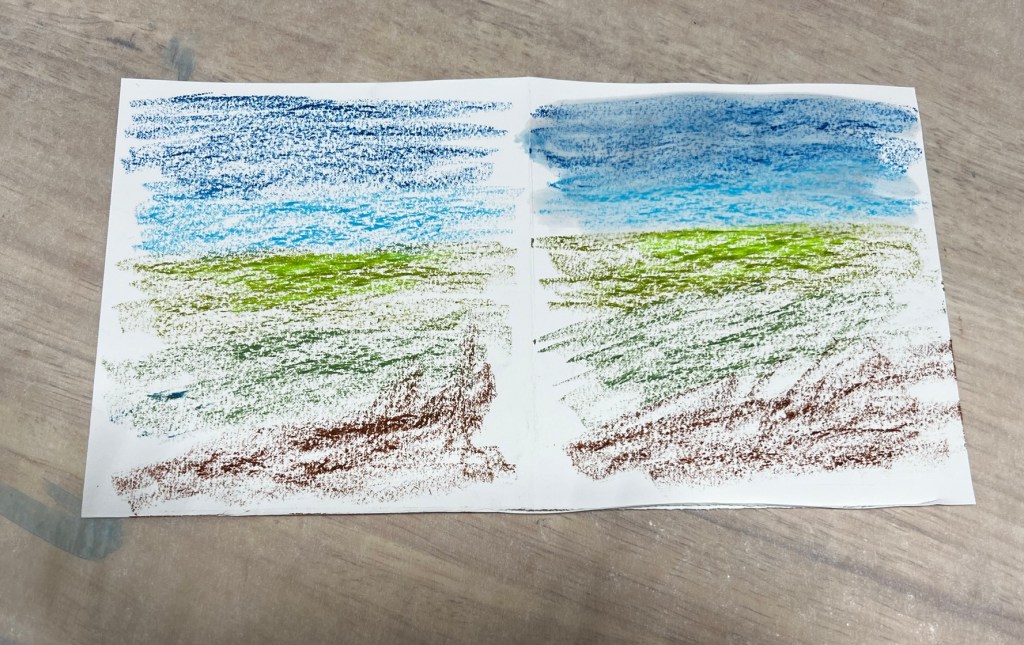
This was my first time using oil pastels, so I approached this new medium with curiosity and a bit of caution. As a soft pastel artist, my process typically involves creating an underpainting to guide the application of pastels, establishing lights, darks, and local colors. I was intrigued by the potential to incorporate the oil pastels into my underpainting process. Here’s how it went!
First Impressions & Application:
I began with a simple landscape underpainting on UArt 500 grit sanded paper. The initial application revealed some interesting characteristics:
• The colors were vibrant and laid down smoothly, I noticed that the pastels occasionally left small chunks. This could be due to the sanded surface or my unfamiliarity with the pressure needed for even application.
• The pastels blended effectively with a brush, as recommended on the box. I also experimented by overlapping colors in the sky.
Blending Experiment – Water vs. Alcohol:
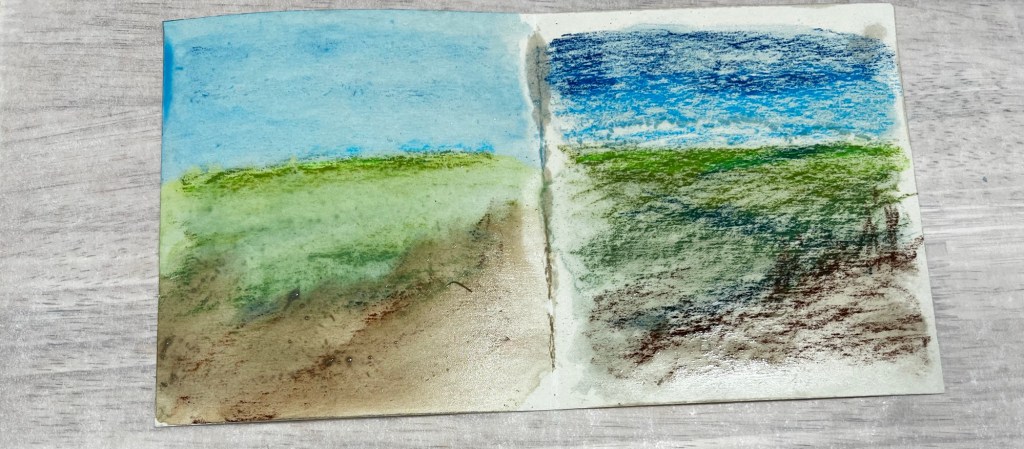
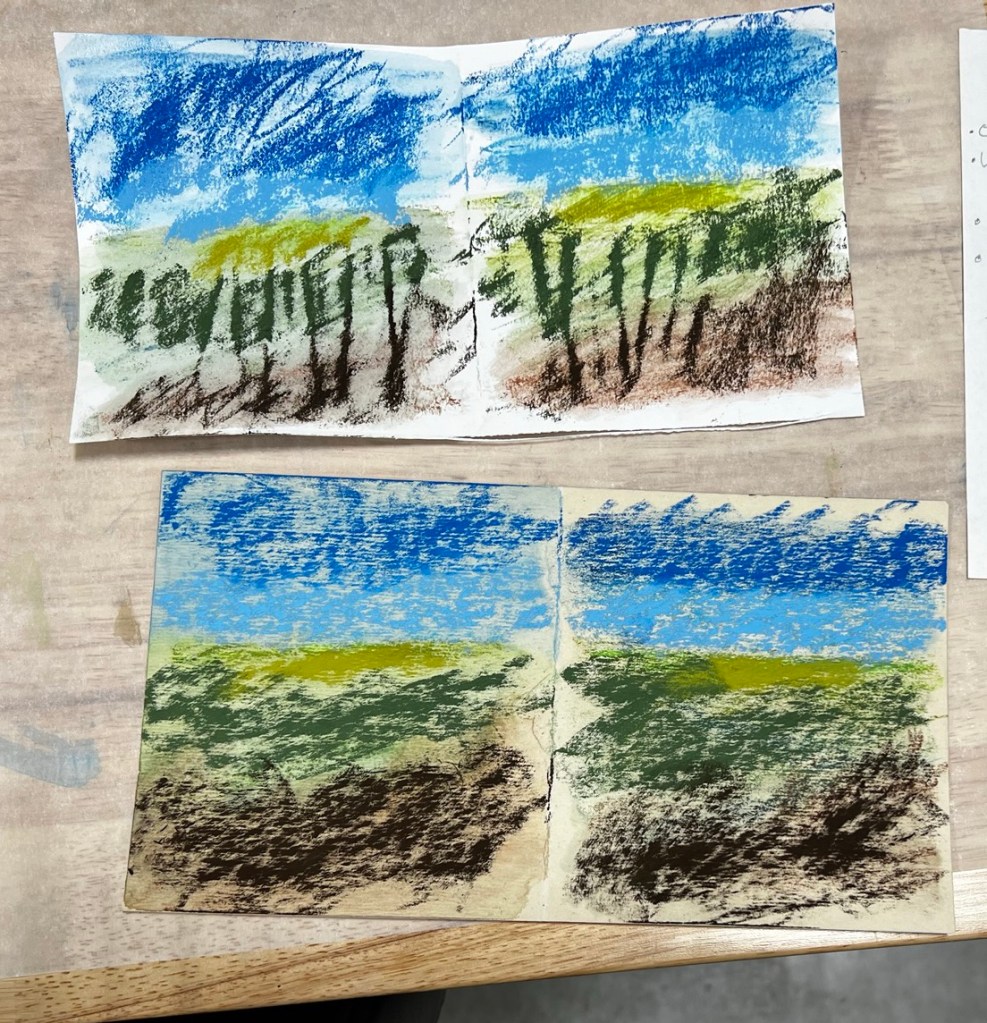
According to the product instructions, water or other oil painting mediums could be used to wash the pastel. To compare the effects, I used water on the left side and alcohol on the right:
• Water was more effective in dissolving the pastels, creating a smoother and more fluid wash.
• Alcohol resulted in a slightly more textured effect, with some areas retaining more pigment.
Testing on Different Surfaces:
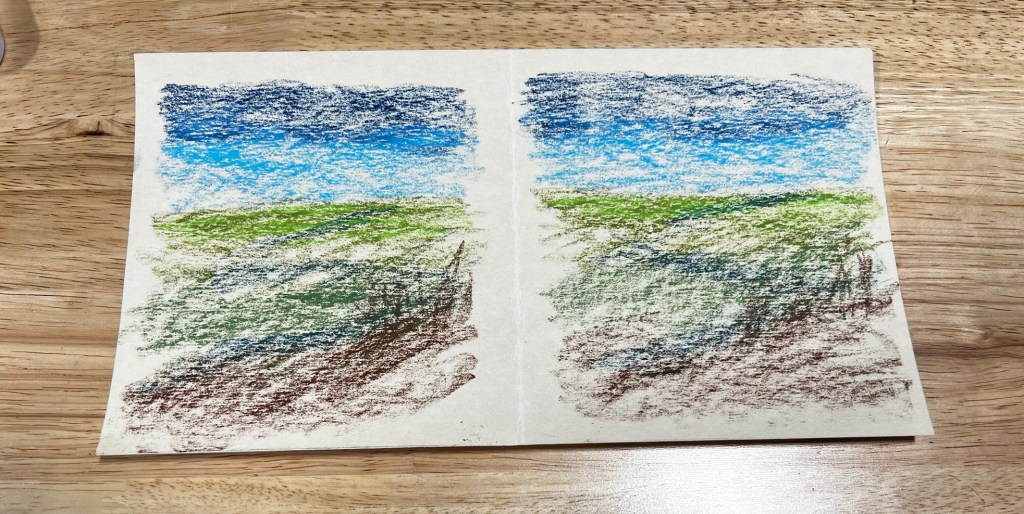
To see how the pastels would respond to a smoother surface, I repeated the process on Strathmore Mixed Media 300 Series paper. This yielded different results:
• The application was smoother, and the pastels blended a bit more easily.
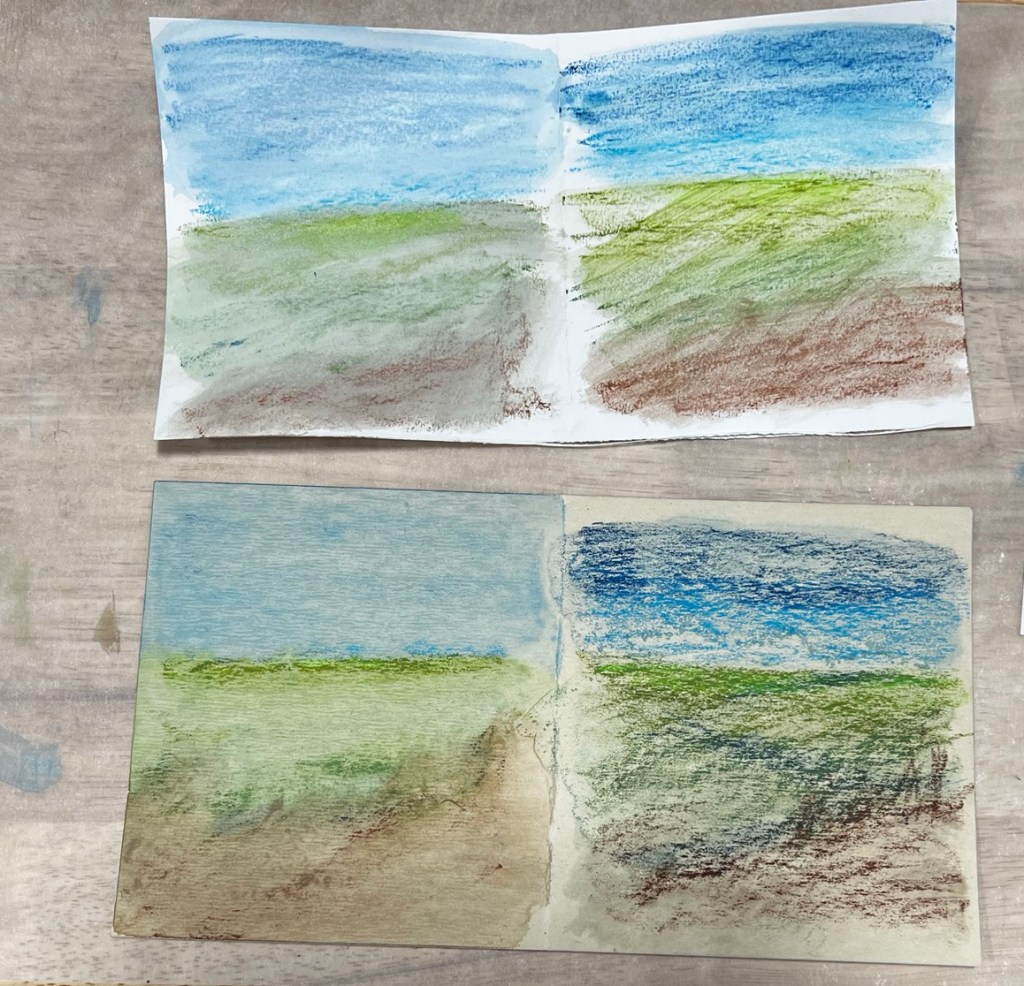
• Both papers worked well, but I preferred the UArt sanded paper for the style of paintings I create, as it added more texture and depth to the underpainting.
Layering with Soft Pastels:
Once the underpaintings dried, I applied soft pastels over the top. The results were promising:
• The washes dried to muted tones, providing a subtle and harmonious base for the soft pastels.
• The soft pastels adhered nicely without any interference from the oil pastel underpainting.
Final Thoughts:
The water-soluble oil pastels offered a new way to create an underpainting. I will continue exploring this technique in future soft pastel paintings. If you’re a soft pastel artist looking for a new way to approach underpaintings, these water-soluble oil pastels are worth a try.
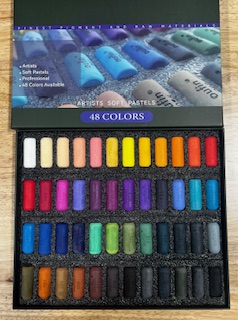
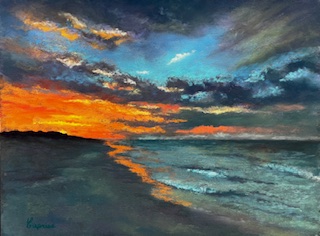
It was an honor to be asked by Leafy Cheung of Artmate, an Art Material Manufacturer, to use and provide feedback on several brands and types of pastel. Here is a painting I created with Oufin Soft Pastels and my feedback about this set.
Oufin is a lesser-known brand to me, but I was pleasantly surprised by the quality of their 48-piece soft pastel set. Striking a balance between hard and soft pastels, these half-stick pastels offer smooth, consistent density without sharp edges from machine marks.
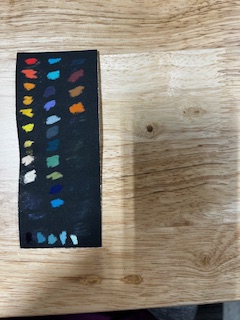
One feature I particularly enjoyed was the absence of wrappers, making the pastels ready for immediate use. For those who like to stay organized, the sticks are stamped with color numbers—perfect for creating a color chart.
The application was buttery and smooth across the board, though, like most sets, there were minor inconsistencies: yellow was slightly softer, and red had a bit of grit. Still, the overall quality was impressive.
With the color and value range provided, I completed a painting, needing only a few additional sticks from my sets: an extreme dark and a trio of turquoise values.
For its size, quality, and price point, the Oufin 48 Soft Pastel set is an excellent choice for beginners or artists looking for an affordable, versatile set to explore.
These are the colors I used for the painting. The colors along the bottom are pulled from my own sets.
First, I want to thank all those who have supported my journey. This includes my husband, family, fellow artists, instructors, and others who engage with me on social media. Your encouragement, constructive critiques that help me grow, and interest in my process motivate and inspire me.
Here is a look back on 2024:
The highlight of my year was attending the International Association of Pastel Societies (IAPS) convention in New Mexico. This magical event brought together over 500 artists from across the globe. There were workshops, networking opportunities, and an art supply store. It was also my first trip to New Mexico.
I purchased several new art supplies at IAPS, some of which I’d never used before. Experimenting with these has been exciting and has enhanced my technique for painting rusty vehicles.
My daughter and I showcased our “Generations” art exhibition at the Rialto Gallery in Morrilton, Arkansas. It was also held at Argent Gallery in North Little Rock in December 2023.
My painting “Mater” was auctioned off at the Community Service Inc. annual charity event. It was an honor to donate this painting for such a worthy cause.
I attended a workshop by Nancie King Mertz and have been practicing the valuable techniques I learned.
My daughter and I collaborated on a mural at a private home featuring the Arkansas Razorback – “Woo Pig Sooie.”
One of my goals was to salvage two “dud” paintings from a 2023 workshop. This exercise was both challenging and rewarding.
Reflecting on the past year has provided valuable insights that will guide me as I plan for 2025. The best part? I am now retired from the corporate world, allowing me more time to paint!
Serve as President of the Arkansas Pastel Society (APS).
Plan, paint, and prepare for the next mother-and-daughter show in March 2026.
Continue teaching one-on-one art sessions, which I began in December 2024.
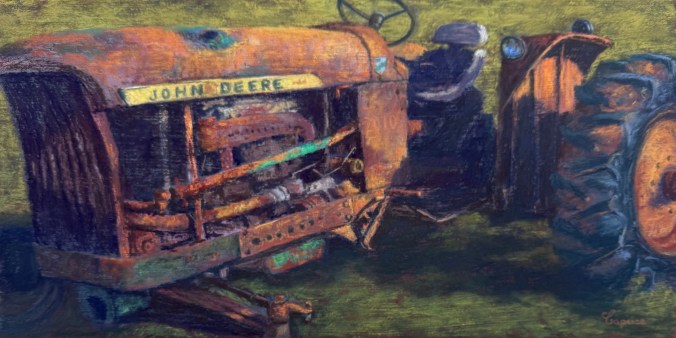
Expand my rusty vehicle series, experimenting with textures and new materials.
Explore the idea of creating an abstract painting inspired by the unique rock formations on Petit Jean Mountain. These formations share qualities with the colors and textures of my rusty art. I’m excited to see where this journey takes me.
What are you most excited about in your plans for 2025?
During this Thanksgiving, I find myself reflecting on all the blessings in my life with a grateful heart. This year feels especially meaningful, as it’s my second month of retirement—a new chapter that’s already brought so much joy, freedom, and creativity.
I’m deeply thankful for my family, friends, faith, and good health. These pillars of my life have carried me through every season. Having more time now allows me to cherish these relationships even more and soak in the small, meaningful moments that truly matter.
I’m also incredibly thankful for my art and the vibrant community surrounding it. My creative journey has been such a source of fulfillment, and it’s humbling to share my work with you. Your support, encouragement, and enthusiasm for my art fuel my passion every day. I’m grateful to the galleries that showcase my pieces and to the connections I’ve formed with fellow artists who inspire me.
Perhaps one of the greatest gifts is sharing this passion with my daughter and her children. Creating alongside her brings a sense of purpose and joy that words can hardly capture. It’s a reminder of how art can connect us in ways that transcend generations and deepen our bonds.
This Thanksgiving, I’m embracing the beauty of this season of life and all the possibilities it holds. Thank you for being part of my journey—I can’t wait to share more with you in the months ahead.
Wishing you all a happy, peaceful, and gratitude-filled Thanksgiving!
As an artist, there’s nothing quite like the feeling of finishing a painting, framing it, and stepping back to admire your work. But what happens when something about it just doesn’t feel right? That’s exactly what happened to me. I framed a painting I’d spent hours working on, but deep down, I knew something was off. That nagging feeling proved to be right, and it led to a valuable lesson that I want to share with you.
The Framing Dilemma
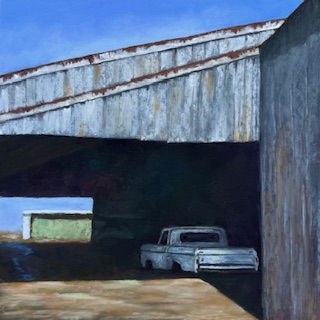
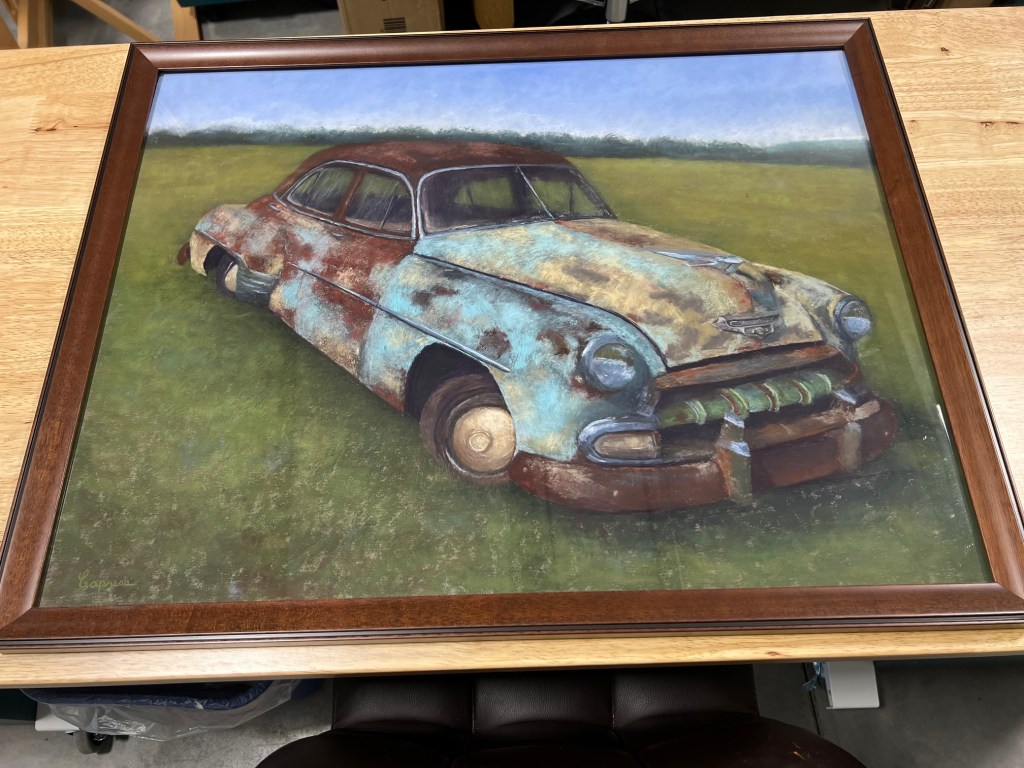
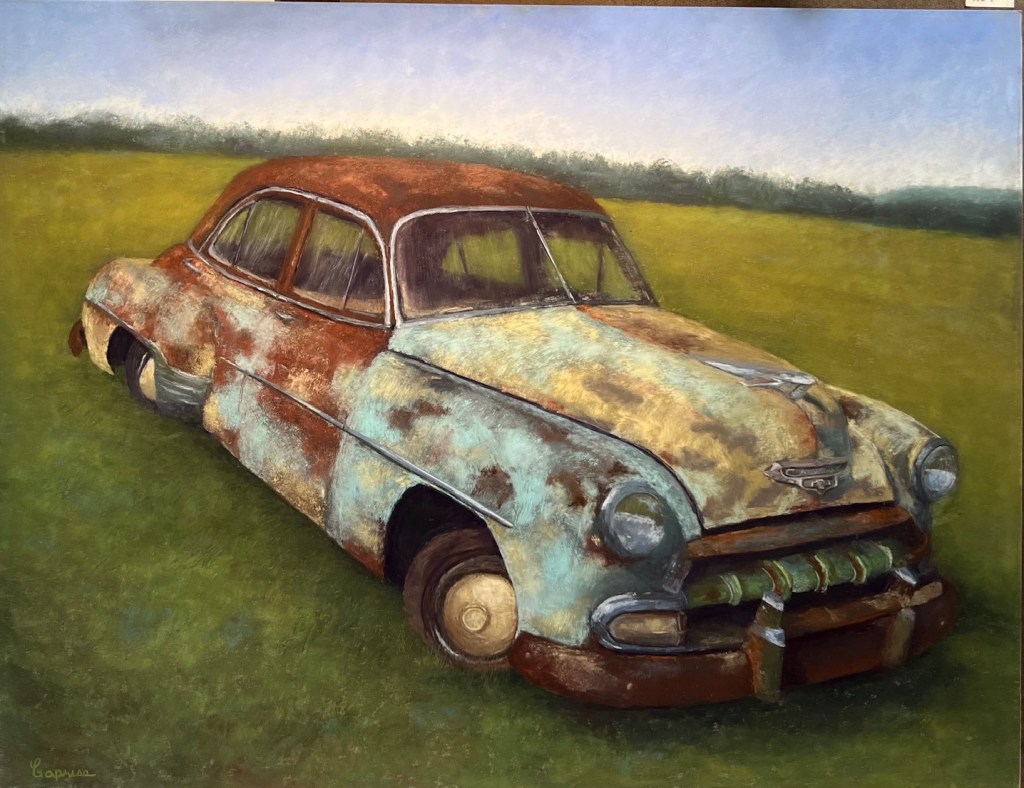
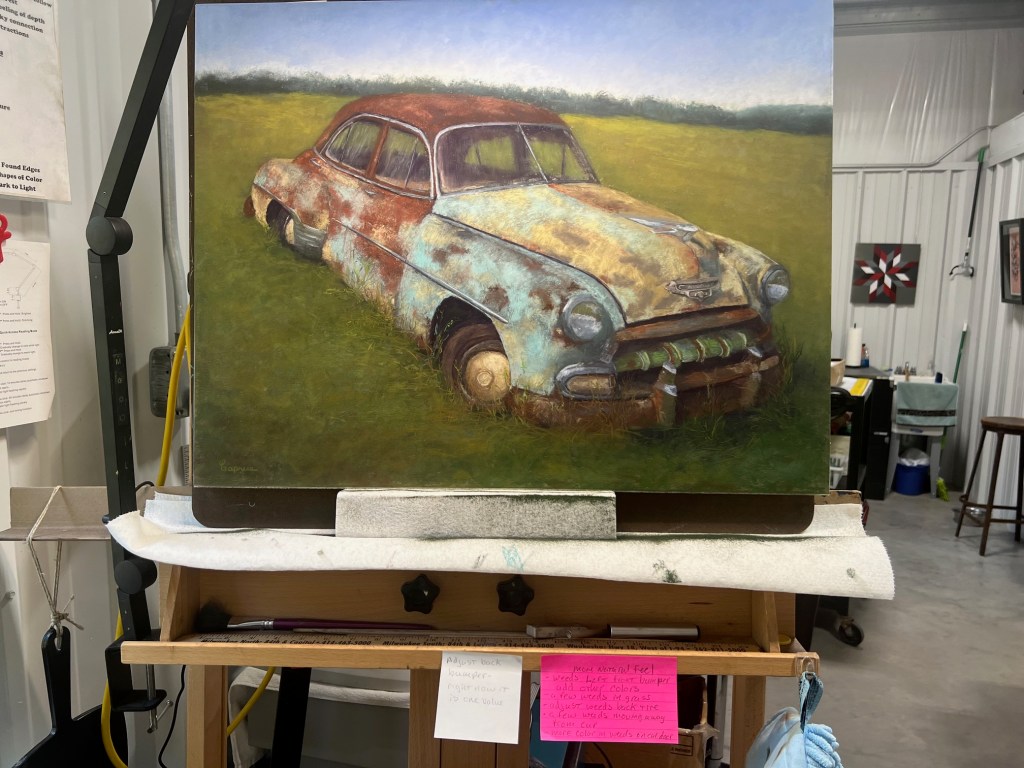
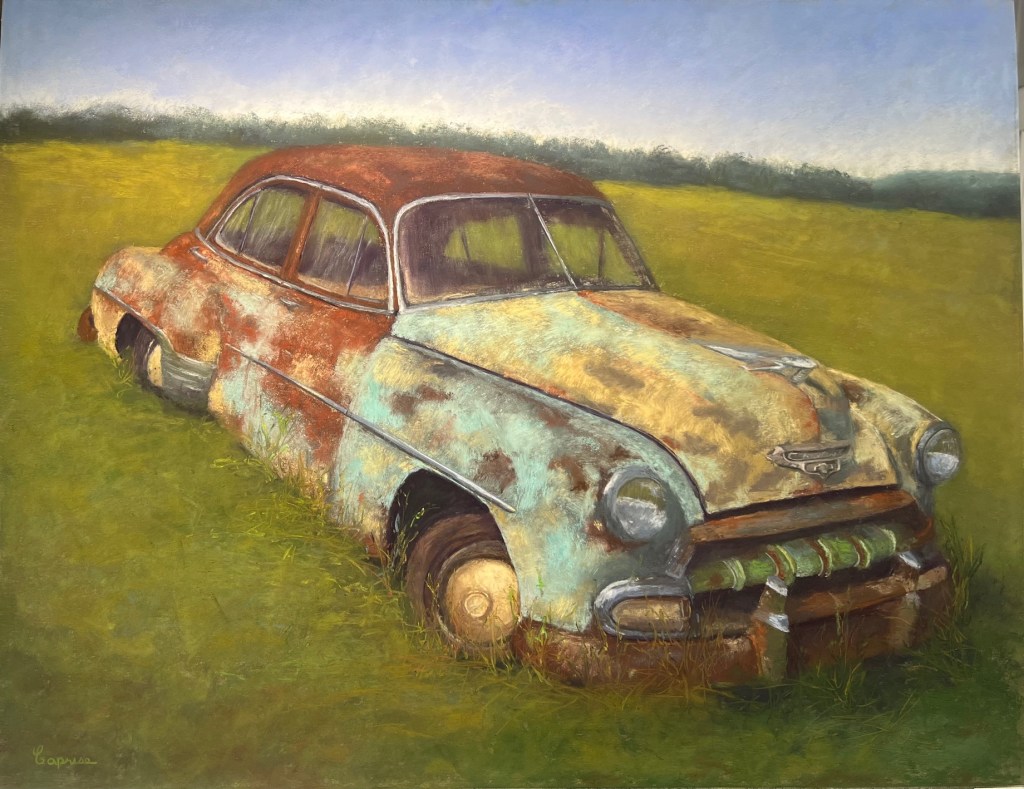
When I first framed the painting, I knew something wasn’t sitting right. It was a landscape featuring an old, rusted car sitting in a manicured sod field. I had painted everything exactly as I saw it, but there was a disconnect between the car and the rest of the scene. The car felt too separate from the environment—it didn’t belong.
I entered the painting into a juried show, and while I didn’t expect perfection, I was curious about what the judge would say. The feedback was kind but clear: the car, while beautifully rendered, seemed to be floating on the surface of the landscape rather than grounded within it. It almost looked as though the car had been cut out and pasted onto the canvas.
I had focused too much on the details of the car without considering how it interacted with its surroundings. The sod farm was too neat, too perfect, and the car felt like it was sitting on top of the landscape rather than being part of it. I painted what I saw vs taking out my artistic license and painting what felt right.
Unframing the Painting to Make Adjustments
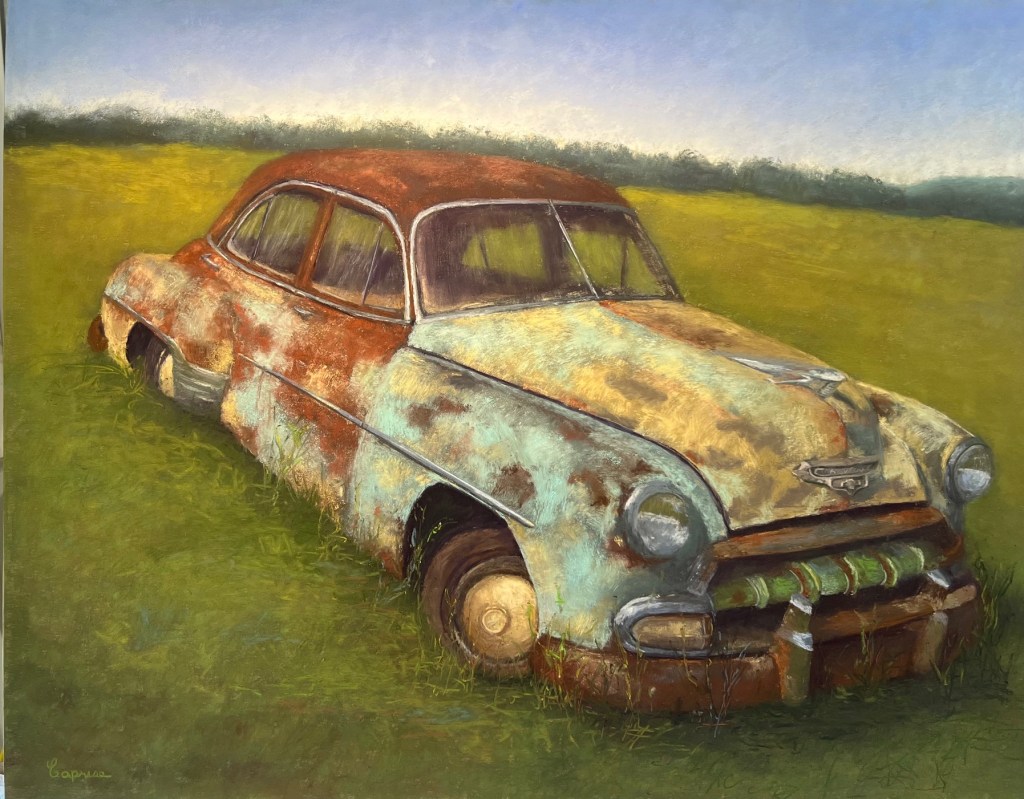
This was the first time I’d ever taken a painting out of its frame to make changes, but I couldn’t shake the feeling that I needed to make it right.
I decided to add texture and life to the landscape. I introduced some rougher, wilder grasses into the scene. I imagined what the field would actually look like after a car had been sitting there for an extended period. Grass would have grown up around it, and weeds would have started to take over. It was exactly what the painting needed.
The Lesson Learned
The biggest lesson I learned from this experience is simple but powerful: trust your gut. If something doesn’t feel right about a painting, don’t rush to frame it or call it finished. That unsettled feeling is often your intuition telling you that there’s more work to be done.
I also realized how important it is to step away from your work. Let the painting sit for a while, maybe even turn it around so you don’t look at it for a few days. Take a photo of it or examine the reflection in a mirror. These tricks can help you see the composition with fresh eyes. And if you’re still unsure, call a friend or fellow artist for feedback.
Conclusion
Correcting a painting that was already framed felt like a major step outside my comfort zone, but it led to a deeper understanding of the creative process. As artists, we’re always learning, even from the mistakes we make. This experience taught me to trust myself, take a step back, and give my art the time it needs to fully evolve.
Have you ever had a similar experience where you needed to correct a piece of artwork after thinking it was finished? I’d love to hear your stories and lessons learned in the comments below.





 Caprise Cooper Art