As an artist, there’s nothing quite like the feeling of finishing a painting, framing it, and stepping back to admire your work. But what happens when something about it just doesn’t feel right? That’s exactly what happened to me. I framed a painting I’d spent hours working on, but deep down, I knew something was off. That nagging feeling proved to be right, and it led to a valuable lesson that I want to share with you.
The Framing Dilemma
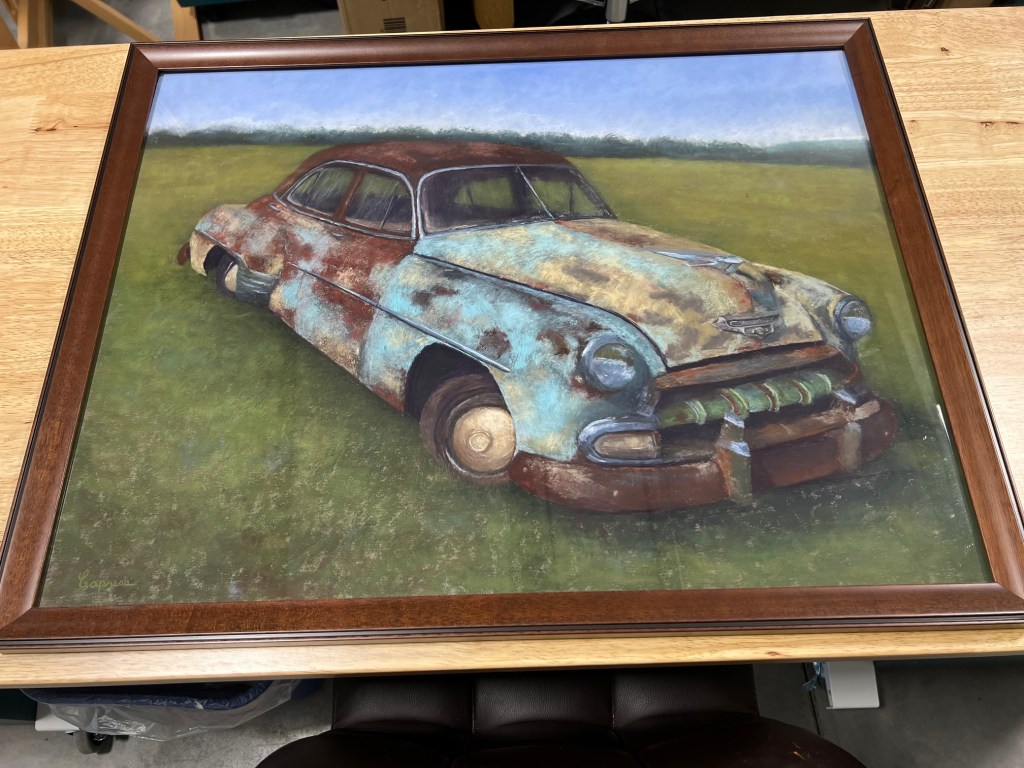
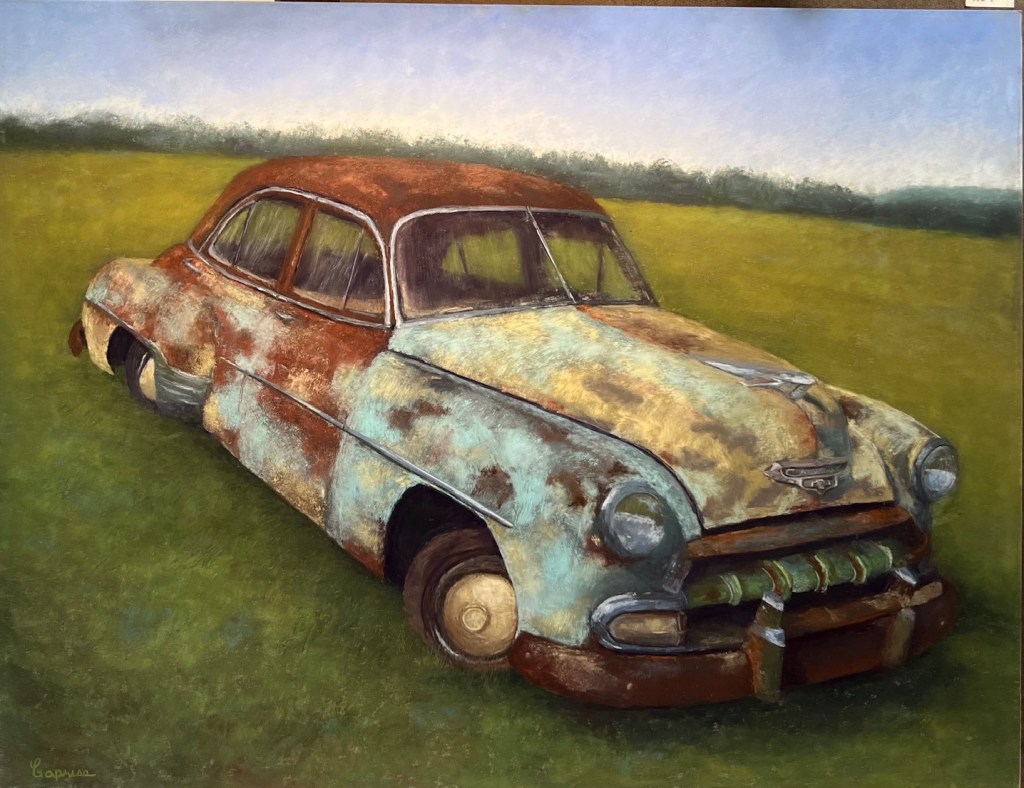
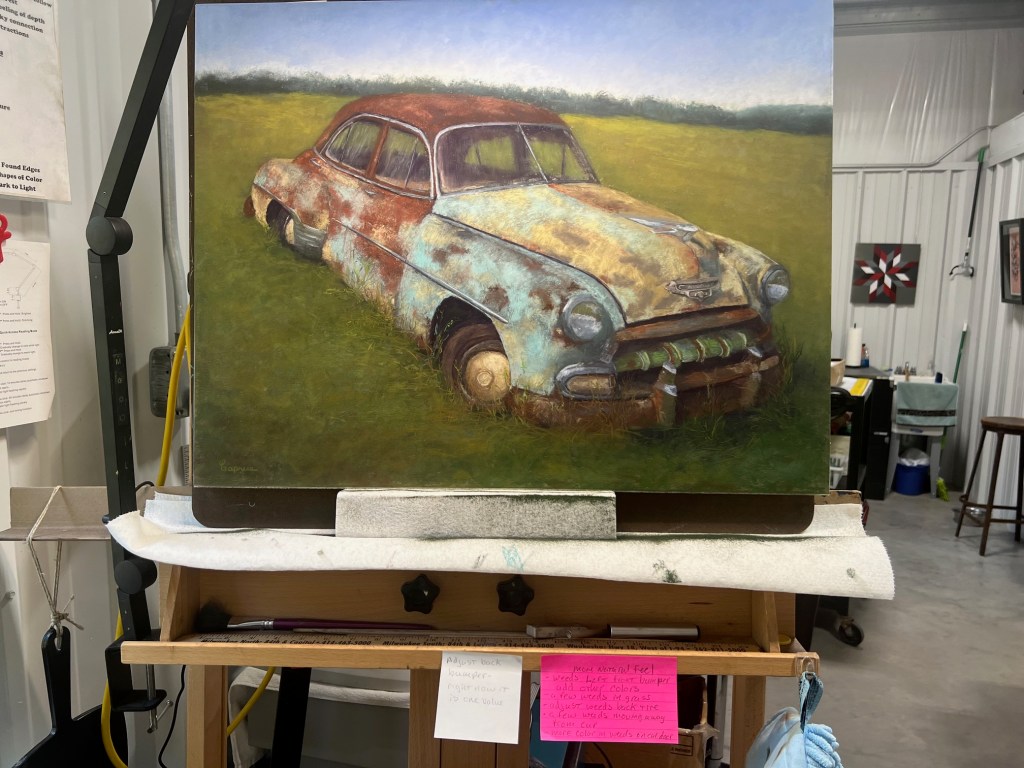
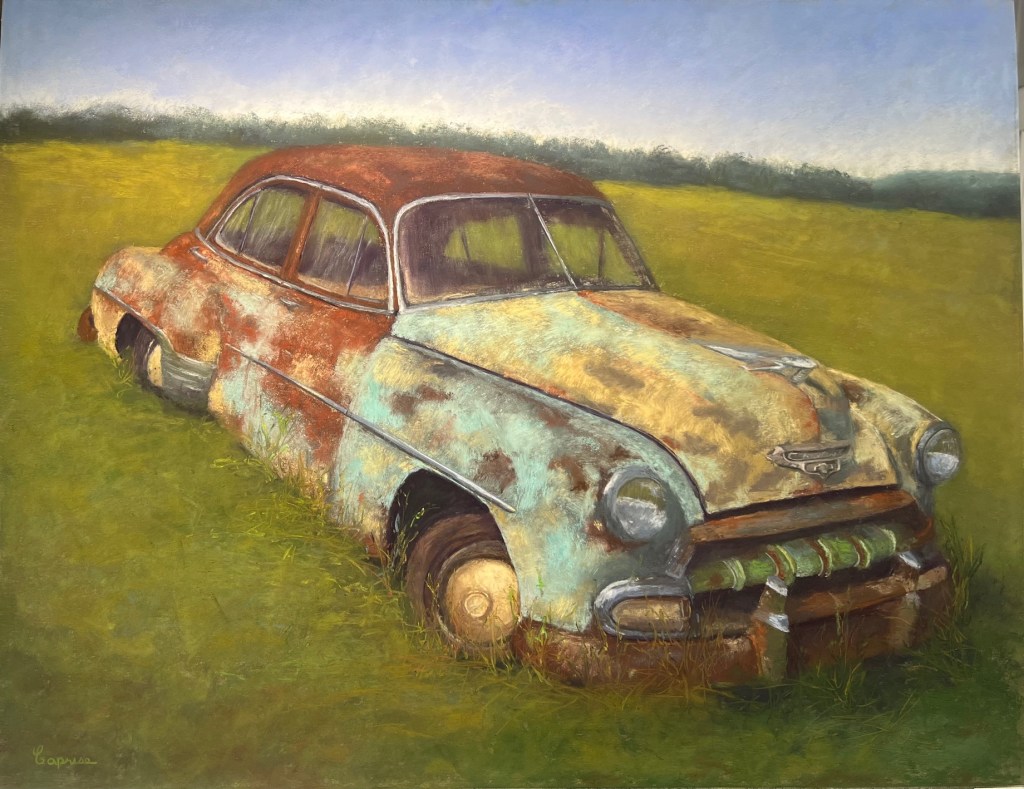
When I first framed the painting, I knew something wasn’t sitting right. It was a landscape featuring an old, rusted car sitting in a manicured sod field. I had painted everything exactly as I saw it, but there was a disconnect between the car and the rest of the scene. The car felt too separate from the environment—it didn’t belong.
I entered the painting into a juried show, and while I didn’t expect perfection, I was curious about what the judge would say. The feedback was kind but clear: the car, while beautifully rendered, seemed to be floating on the surface of the landscape rather than grounded within it. It almost looked as though the car had been cut out and pasted onto the canvas.
I had focused too much on the details of the car without considering how it interacted with its surroundings. The sod farm was too neat, too perfect, and the car felt like it was sitting on top of the landscape rather than being part of it. I painted what I saw vs taking out my artistic license and painting what felt right.
Unframing the Painting to Make Adjustments
This was the first time I’d ever taken a painting out of its frame to make changes, but I couldn’t shake the feeling that I needed to make it right.
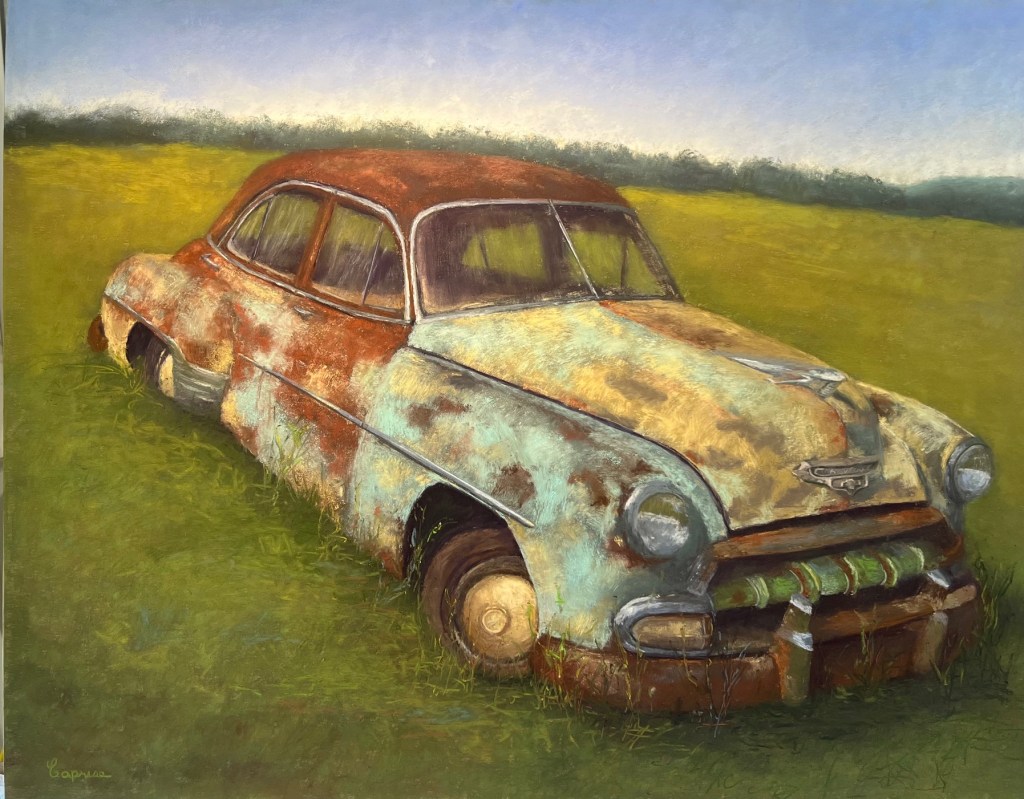
I decided to add texture and life to the landscape. I introduced some rougher, wilder grasses into the scene. I imagined what the field would actually look like after a car had been sitting there for an extended period. Grass would have grown up around it, and weeds would have started to take over. It was exactly what the painting needed.
The Lesson Learned
The biggest lesson I learned from this experience is simple but powerful: trust your gut. If something doesn’t feel right about a painting, don’t rush to frame it or call it finished. That unsettled feeling is often your intuition telling you that there’s more work to be done.
I also realized how important it is to step away from your work. Let the painting sit for a while, maybe even turn it around so you don’t look at it for a few days. Take a photo of it or examine the reflection in a mirror. These tricks can help you see the composition with fresh eyes. And if you’re still unsure, call a friend or fellow artist for feedback.
Conclusion
Correcting a painting that was already framed felt like a major step outside my comfort zone, but it led to a deeper understanding of the creative process. As artists, we’re always learning, even from the mistakes we make. This experience taught me to trust myself, take a step back, and give my art the time it needs to fully evolve.
Have you ever had a similar experience where you needed to correct a piece of artwork after thinking it was finished? I’d love to hear your stories and lessons learned in the comments below.
 Caprise Cooper Art